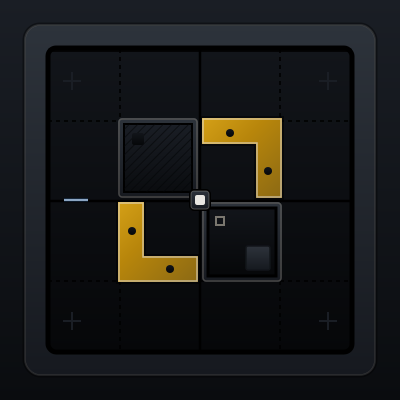
Eye Path
Guide the reading order on purpose instead of making every block compete equally.
Also heard as: scan path, visual flow
Definition
Eye path is the order people notice and read interface elements as they move through a screen.
Why it matters
If the eye path breaks, people miss the real action and spend effort decoding the layout instead of using it.
Visual comparator
Prompt language
- Make the eye path move from headline to proof to primary action without competing side content.
- Reduce visual noise around the CTA so the scan path lands on one decision first.
Anti-patterns
- Giving the hero, navigation, badges, and sidebar equal visual weight at first glance.
- Sprinkling bright accents everywhere so users have no obvious first focal point.
When to research more
Research more when the page contains multiple user roles, dense dashboards, or competing business goals that make the first action ambiguous.