Repetition
Repeat the important patterns so users can learn the system instead of relearning each section.
Also heard as: consistency, repeated patterns
Definition
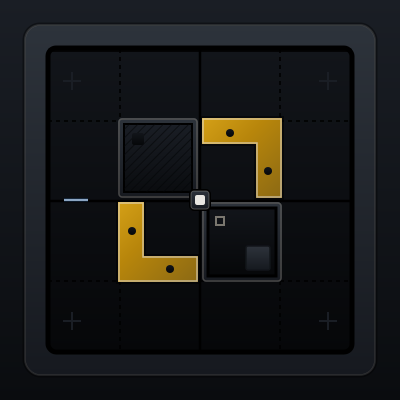
Repetition is the intentional reuse of spacing, styling, structure, and interaction patterns across an interface.
Why it matters
Consistency reduces learning cost. When the same action or status appears with different rules every time, the product feels unreliable.
Visual comparator
Prompt language
- Repeat the same card anatomy and spacing scale across all three dashboard sections.
- Use one badge system for status instead of inventing a new pattern in every panel.
Anti-patterns
- Changing card padding, heading style, and action placement from section to section without a reason.
- Using different status colors and label styles for the same semantic meaning.
When to research more
Research more when a design system needs variants, state logic, or governance rules so consistency does not collapse under edge cases.